
Winston AI
Detects AI-generated text and images, with plagiarism checks and shareable reports.
FreemiumFree planWeb
Last verified Jul 8, 2026
Detects AI-generated text and images, with plagiarism checks and shareable reports.
Last verified Jul 8, 2026
Fast-read signals for fit, pricing, and trust.
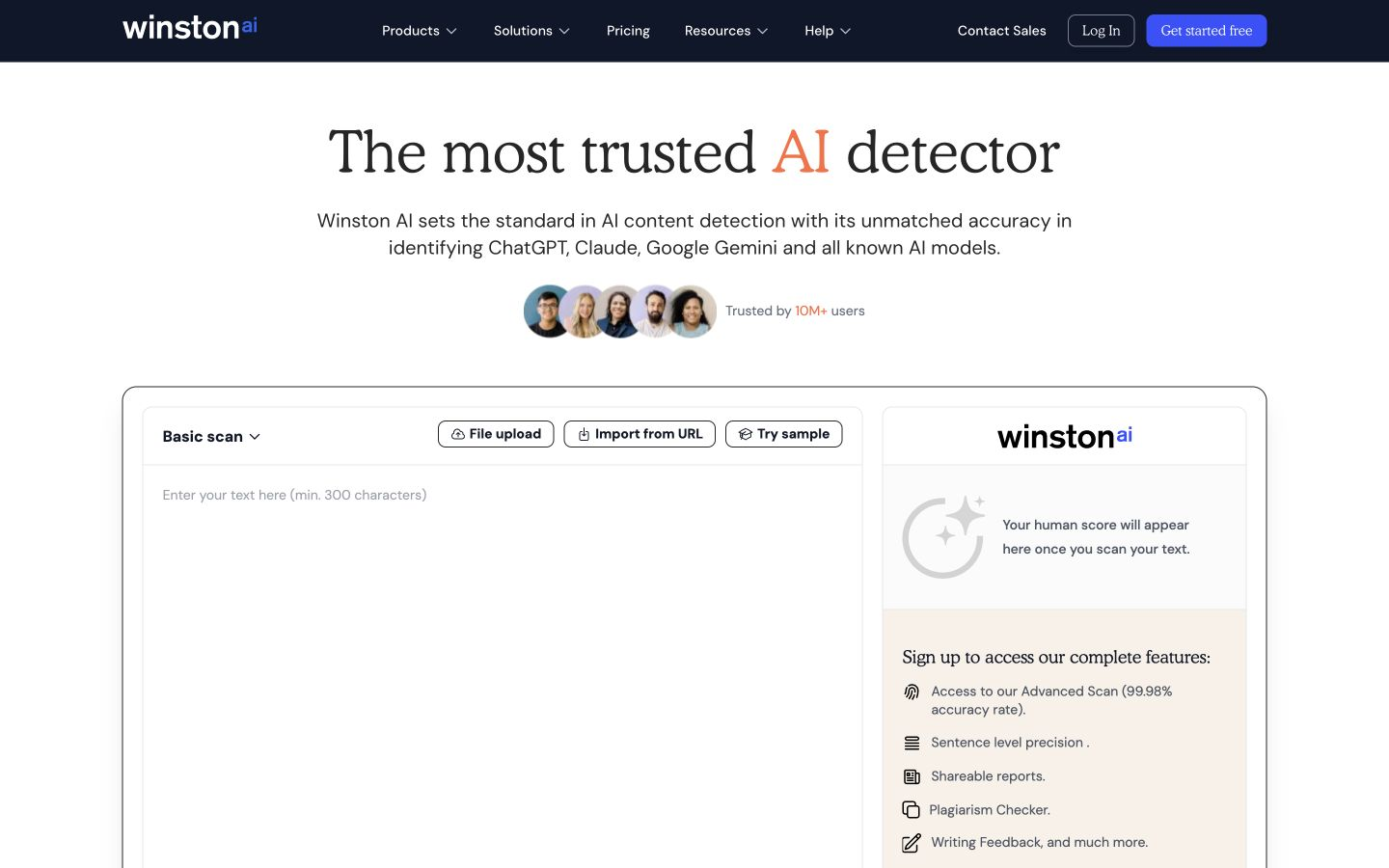
Winston AI is an AI-content detection tool that flags whether text or images appear AI-generated, with sentence-level highlighting, a plagiarism checker, and shareable reports. It is aimed at educators, publishers, and agencies who need to review content provenance before they trust or publish it. It is built to flag likely AI involvement, not to prove authorship. Detection is probabilistic, so results inform a human judgement rather than settle it.
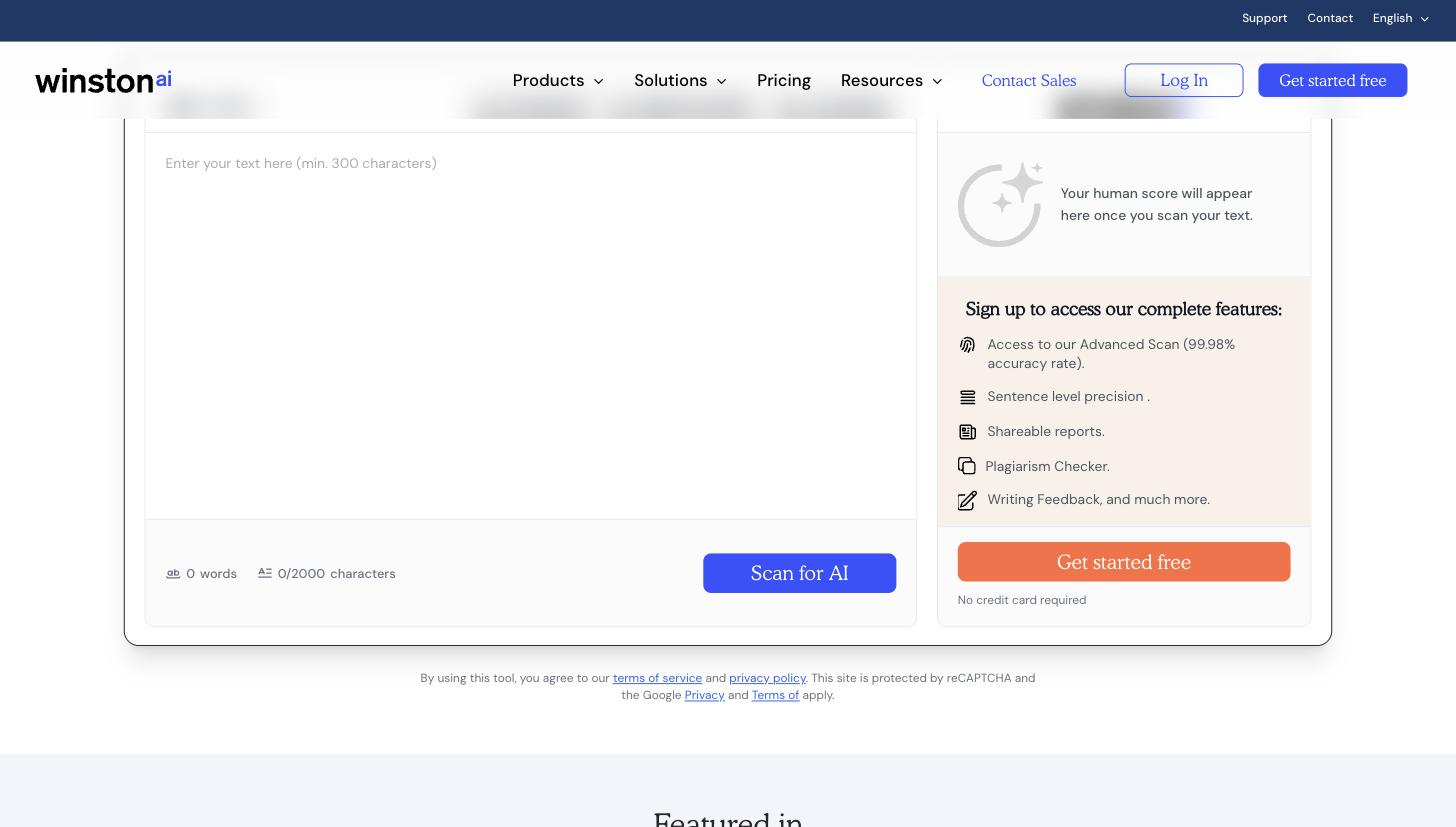
You paste or upload text (or an image) and it returns a human-versus-AI assessment, highlighting the sentences that look AI-generated so you can see where to focus. A plagiarism checker flags matching sources, and results export as shareable reports for teams or institutions.
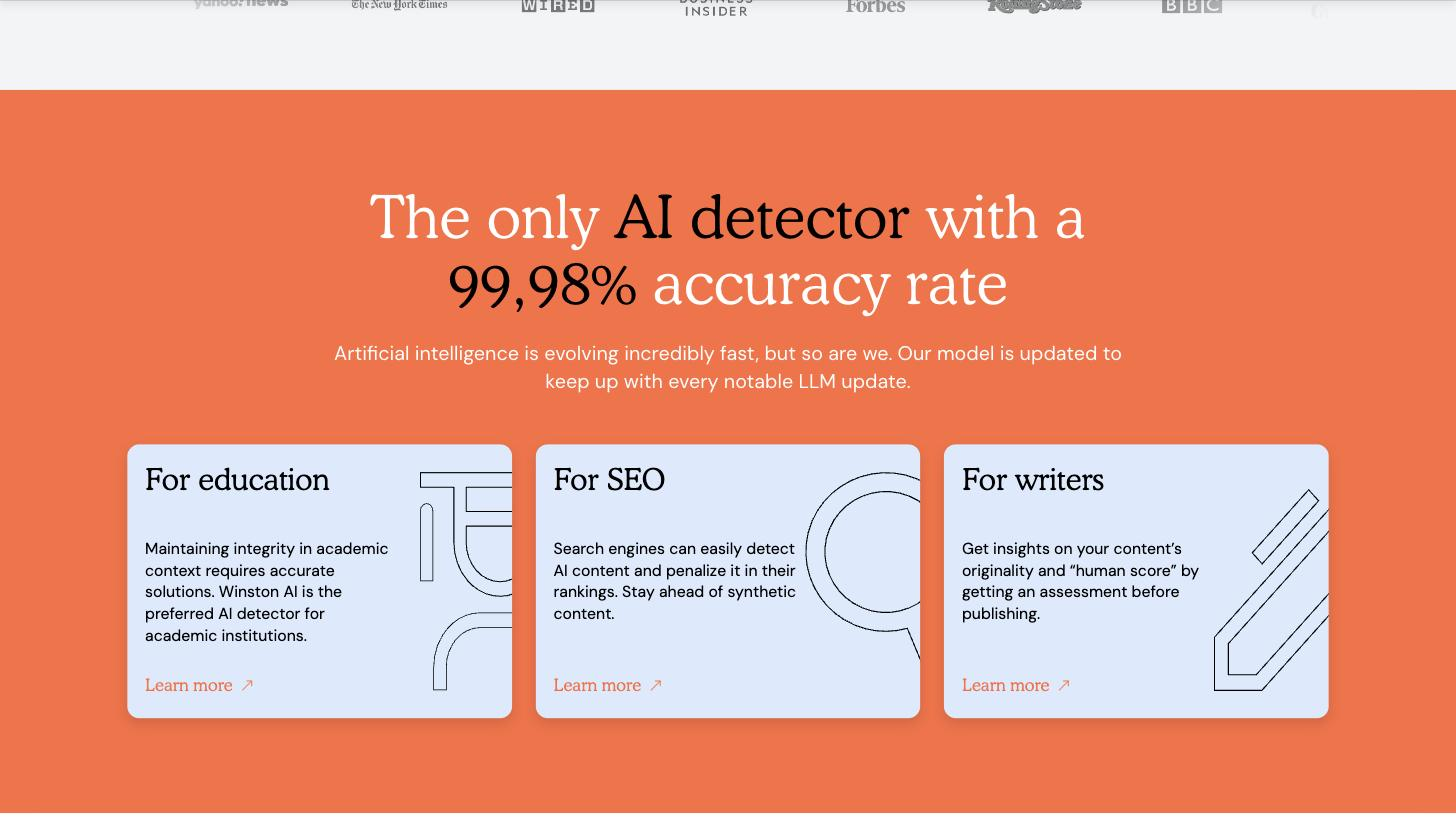
It suits teachers, editors, content managers, and agencies who need to vet submissions or published work, and offers an API and a site-certification option for teams embedding checks into a workflow.
Detection is a probability, not a verdict: AI and human writing overlap, so flagged text warrants a human review rather than an automatic conclusion, and no detector catches every case.
Quick fit check against how you actually work.
What you can actually do with this tool.
Assesses whether text appears AI-generated and highlights the sentences that drive the result, so a review can focus on specific passages.
Extends the same provenance check to images, flagging likely AI-generated visuals alongside text.
Flags passages that match outside sources, supporting originality checks in the same pass as detection.
Generates clear reports you can pass to teams, clients, or institutions to document a review.
Surfaces feedback on the text, adding context beyond the raw detection result.
Offers an API and a website-certification option for teams that want checks built into a workflow.
Pricing tiers and what's included in each.
Winston AI has a free tier with 2,000 credits for 14 days — enough to scan approximately 2,000 words of AI content. Paid plans: Essential at $18 per month ($10 on annual billing) for 80,000 credits per month; Advanced at $29 per month ($16 annual) for 200,000 credits per month and up to 5 team members; Elite at $49 per month ($26 annual) for 500,000 credits per month and unlimited team members. One credit equals one word for AI detection; plagiarism checks use 2 credits per word.
A short path to first value.
Winston AI Detector Tutorial
Common questions about this tool, answered.
It is probabilistic — human and AI writing overlap, so results indicate likelihood and should guide a human review rather than serve as proof of how something was written.
Yes — false positives are possible, which is why sentence-level flags exist: they show what to examine so a person makes the final call.
Data handling is a buyer-relevant question; review the current privacy terms before submitting sensitive or student work, as practices can change.
It covers multiple AI models and languages, though confidence can vary by language, so weigh results accordingly for non-English text.
Context for choosing between this tool and alternatives.
Weigh Winston AI against other detectors on coverage and workflow: it pairs text and image detection with plagiarism and reports in one place. GPTZero is a common alternative for text classification; Copyleaks leans toward plagiarism and enterprise. Compare on whether you need detection, originality, and shareable documentation together or a single focused check.
Other tools that show up for the same kind of work.
GPTZero
Freemium
Copyleaks
Freemium
Undetectable AI
Paid