
GPTZero
Detects AI-generated text and verifies authorship for educators, publishers, and editors.
FreemiumFree planNo credit cardWeb
Last verified Jun 30, 2026
Detects AI-generated text and verifies authorship for educators, publishers, and editors.
Last verified Jun 30, 2026
Fast-read signals for fit, pricing, and trust.
GPTZero is an AI-content detector that estimates whether text was written by a model such as ChatGPT, Claude, Gemini, or Llama. It scores submissions, highlights likely AI passages, and adds authorship verification and a plagiarism check. It is aimed at teachers, publishers, and editors who need to judge whether writing is human, with the honest caveat that no detector is certain. Best used as a signal, not a verdict.
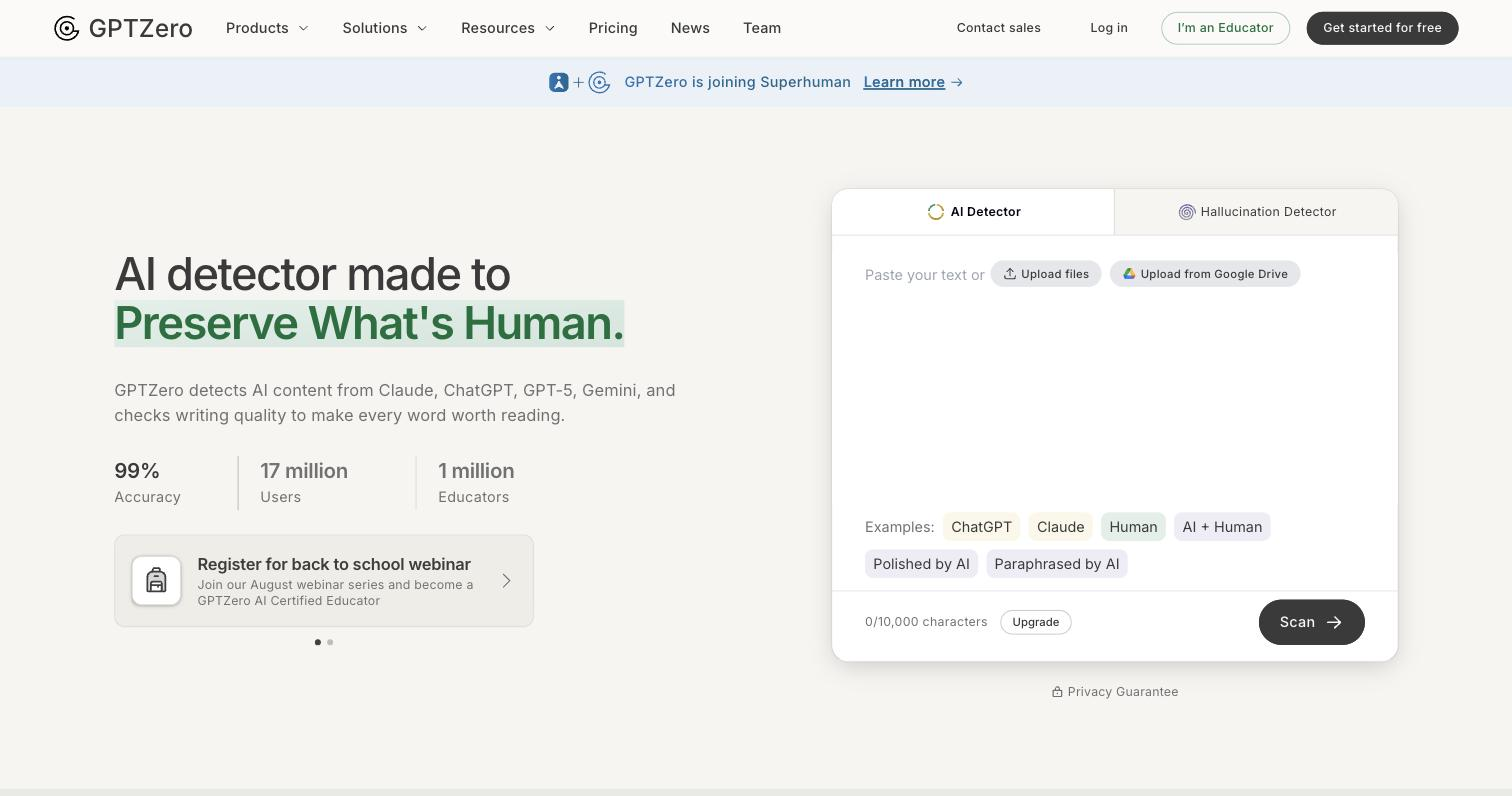
You paste or upload text — or open a submission inside a connected learning system — and it returns an AI-likelihood score with the most suspect passages highlighted, drawing on a multi-component model trained on output from systems like ChatGPT, Claude, Gemini, and Llama. Alongside detection it can verify authorship through writing reports or replay, and run a plagiarism check against outside sources.
It is aimed at the people who review others' writing — teachers, academic institutions, publishers, and editors — and it connects to learning platforms such as Canvas and Google Classroom so checks happen where work is submitted.
The caveat that shapes everything: detection is probabilistic. A high score points to writing worth a closer look, not a proven verdict, so it belongs in a human decision rather than replacing one.
Quick fit check against how you actually work.
What you can actually do with this tool.
Estimates whether a passage was written by a model, covering major systems such as ChatGPT, Claude, Gemini, and Llama, and highlights the sections that look generated.
Runs a closer, multi-step analysis aimed at higher accuracy with fewer false positives when a result needs more confidence than a quick check gives.
Uses writing reports or video replay of the writing process to help a person demonstrate that work is genuinely their own.
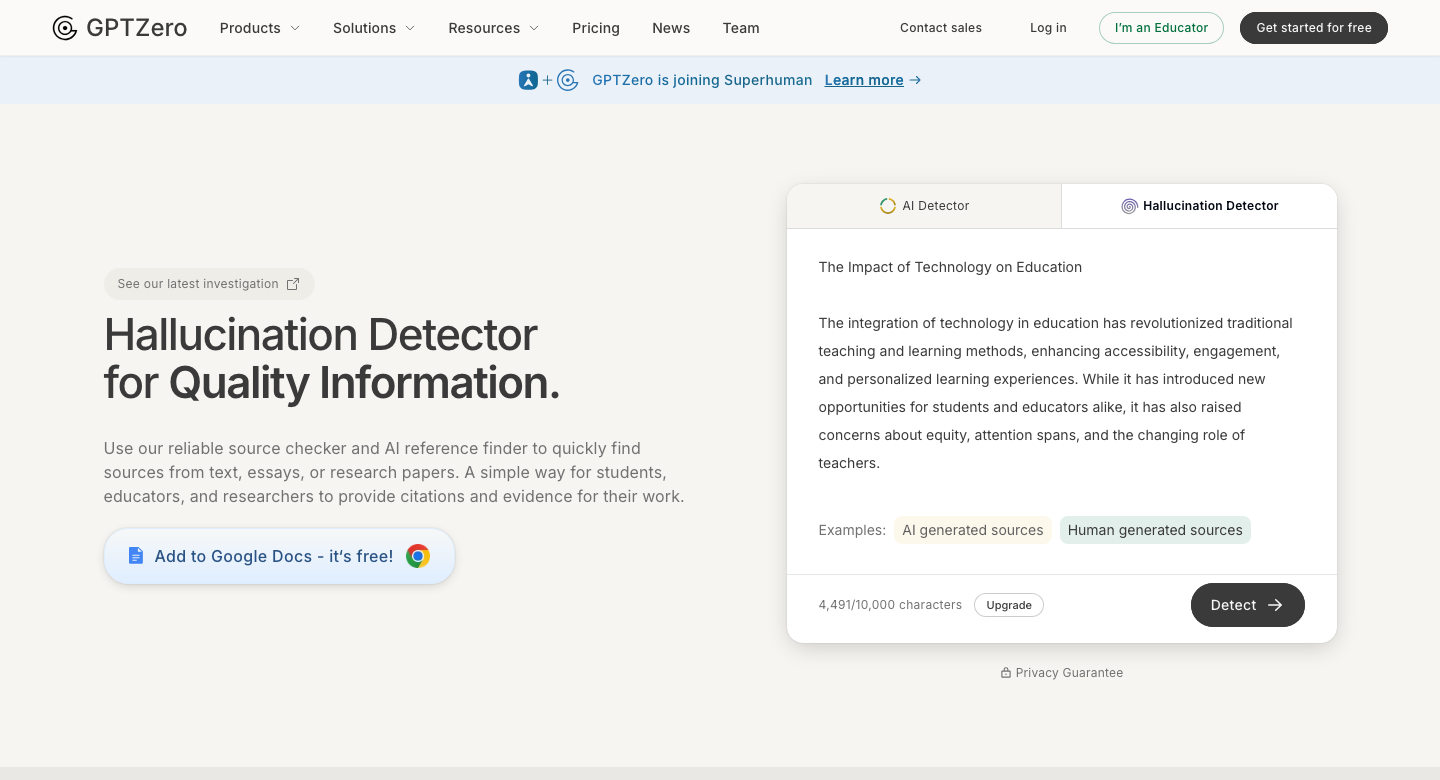
Checks whether content was copied from outside sources without attribution, so reviewers can judge originality alongside AI likelihood.
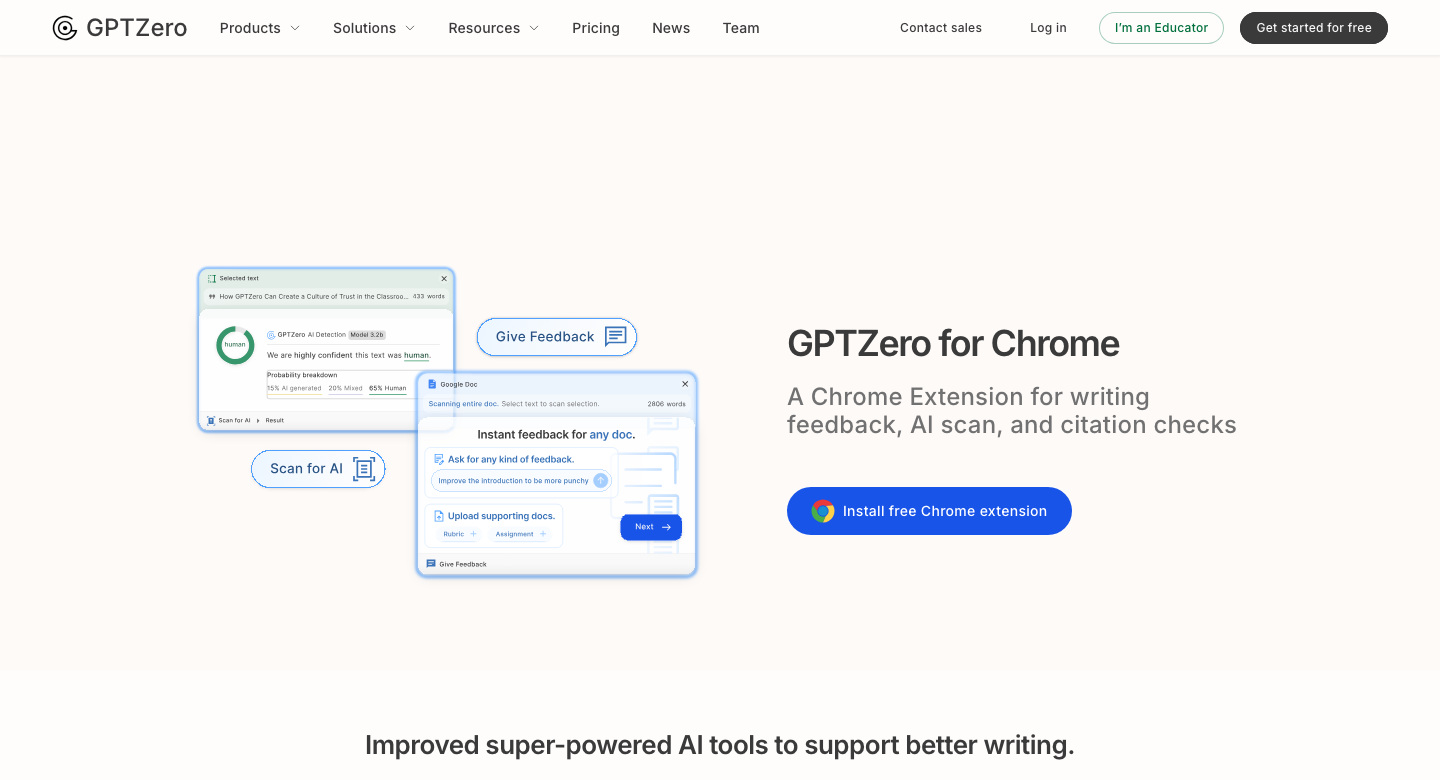
Offers AI-powered writing guidance aimed at building responsible writing habits rather than only flagging problems.
Connects with learning systems including Canvas and Google Classroom so checks happen inside tools educators already use.
Pricing tiers and what's included in each.
Free plan available. Paid plans start at $12.99 per month.
A short path to first value.
a submission inside your connected learning system.
for the whole piece.
to be AI-generated.
borderline and needs a closer look.
gather supporting evidence.
making any decision about the work.
What is GPTZero? | Demo Video 2025
Common questions about this tool, answered.
Treat a high score as a prompt to look closer, not proof. Pairing it with a human read, and with authorship evidence where a grade or publication is at stake, is the defensible way to act on it.
Authorship verification through writing reports or replay of the writing process lets a writer demonstrate the work is genuinely theirs, which is what resolves a disputed result rather than the score on its own.
It is built for review at scale, so a reviewer can run a set of submissions and triage which ones to examine more closely, instead of reading each cold.
Yes — a plagiarism check looks for copied, unattributed sources, so a reviewer can judge originality and authenticity in the same pass.
Context for choosing between this tool and alternatives.
Choosing between detectors comes down to how each performs on your kind of writing and how it treats false positives, not a single headline number. Pick this one when you want detection paired with authorship and plagiarism checks for review work. If plagiarism and originality are the priority, Copyleaks or Originality.ai focus there; other detectors such as Winston AI overlap. Because every detector is probabilistic, many reviewers run more than one and treat agreement as added confidence.
Other tools that show up for the same kind of work.
Undetectable AI
Paid