
Keyword Insights
Clusters keywords into topics and turns them into briefs and content for SEO.
PaidFree trialWeb
Last verified Jul 4, 2026
Clusters keywords into topics and turns them into briefs and content for SEO.
Last verified Jul 4, 2026
Fast-read signals for fit, pricing, and trust.
Keyword Insights is an SEO tool that groups keywords into topic clusters, analyses search intent, and turns them into content briefs and drafts. It is aimed at SEO teams and content marketers building topical coverage rather than one-off pages. Clustering plus briefs in one workflow is its strength. It supports topical coverage; rankings still depend on many factors beyond on-page work.
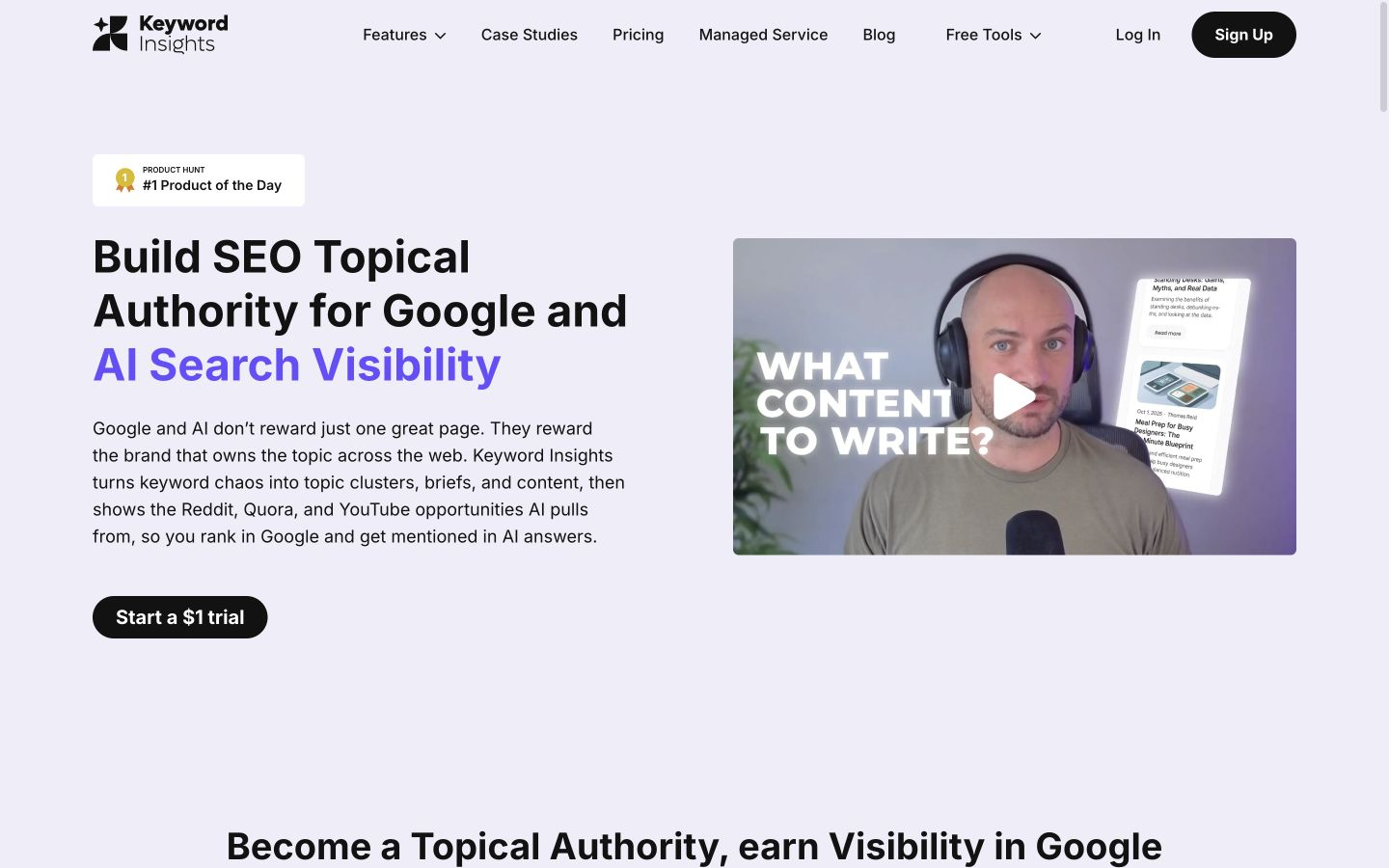
You import or discover a keyword list and Keyword Insights clusters it into topics, identifies the search intent behind each group, and turns the clusters into content briefs and AI-assisted drafts, with prompts toward related opportunities on places like Reddit, Quora, and YouTube.
It suits SEO specialists, organic-growth leads, and agencies planning topic clusters and briefs at scale who want clustering, briefing, and drafting in one workflow rather than stitched across tools; it sits at the planning end of the SEO stack, upstream of the writers and CMS that produce the pages. It bundles clustering, briefs, and a writing assistant as one tool rather than separate products.
The honest limit: it builds topical coverage, but ranking outcomes depend on content quality, authority, and competition — clusters and briefs are inputs to results, not a guarantee of them, and AI drafts still need editing.
Quick fit check against how you actually work.
What you can actually do with this tool.
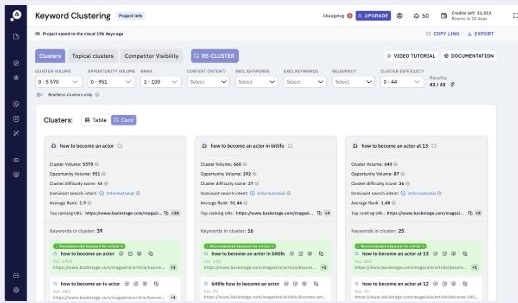
Groups keywords into topic clusters, so a hub is planned rather than guessed.
Identifies the intent behind keywords, so content matches what searchers want.
Turns clusters into briefs writers can follow, bridging research and writing.
Finds related keywords to expand a cluster's coverage.
Drafts content from briefs, which still needs editing and fact-checking.
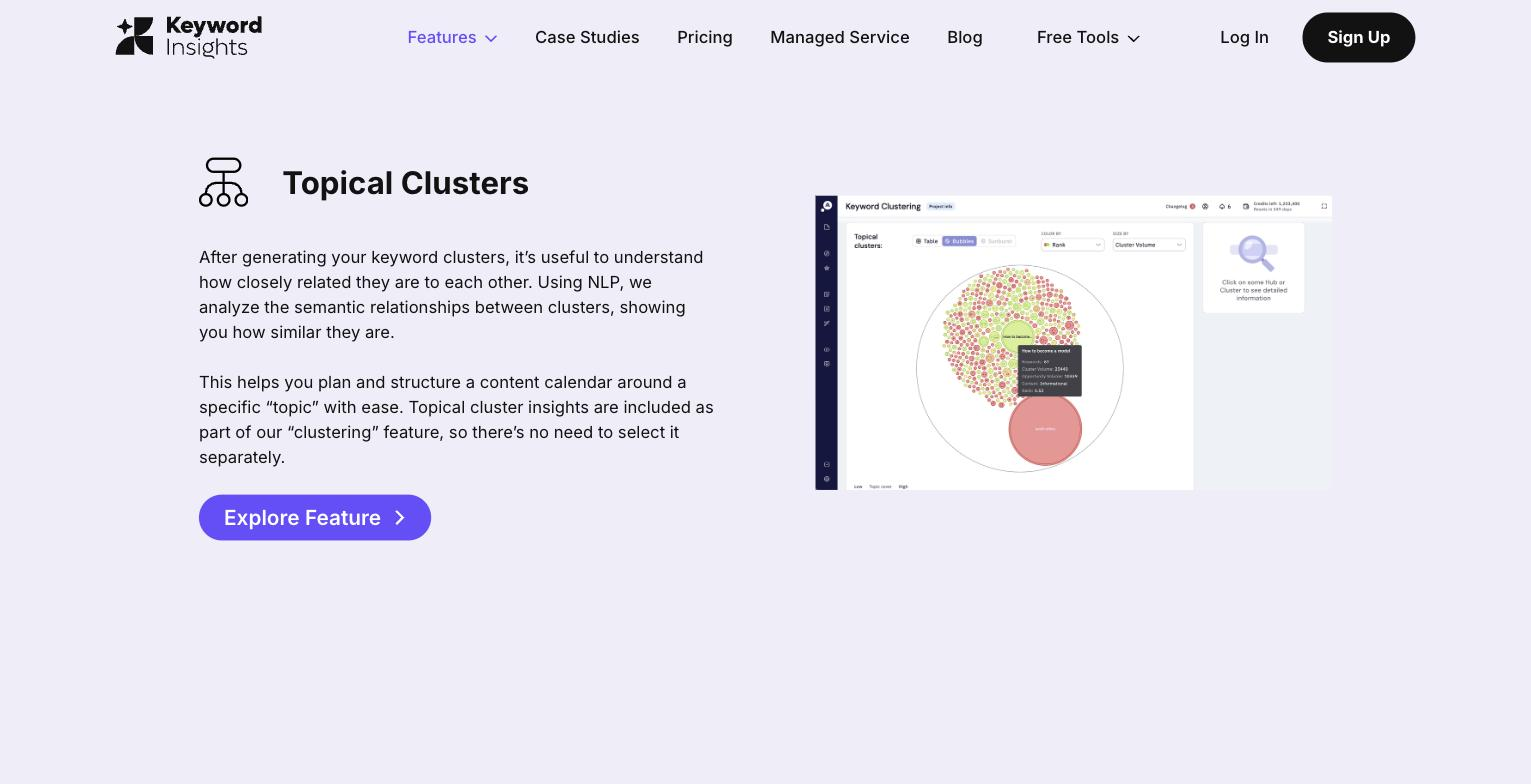
Organises coverage into topical clusters to build breadth across a subject.
Pricing tiers and what's included in each.
A $1 7-day trial is available. Paid plans start at $58 per month (Basic); Professional is $99 per month; Enterprise is custom.
A short path to first value.
Keyword Insights 2025 Demo
Common questions about this tool, answered.
It builds topical coverage and briefs, but rankings depend on content quality, authority, and competition, so treat it as planning input, not a guarantee.
No — drafts from briefs need editing and fact-checking before they're publish-ready and genuinely useful.
It turns a messy keyword list into organised topics and intents, which is the slow, manual part of planning a hub.
Not primarily — it's built for clustering, briefing, and content, so pair it with a tracker if you need rank monitoring.
Context for choosing between this tool and alternatives.
SEO tools differ on where they stop. Keyword Insights goes from keyword clusters to briefs and drafts; TopicRanker, the closest alternative here, focuses on finding low-competition keyword questions, while Frase and NeuronWriter centre on briefing and on-page content optimisation. Compare on whether clustering-to-content in one workflow or a narrower keyword or optimisation job matches how your team plans SEO.
Other tools that show up for the same kind of work.
Frase
Paid
NeuronWriter
Paid