Frase
Researches search results, builds content briefs, and scores drafts so content ranks.
Last verified Jun 30, 2026
Researches search results, builds content briefs, and scores drafts so content ranks.
Last verified Jun 30, 2026
Fast-read signals for fit, pricing, and trust.
Frase is a content tool that brings SEO research, briefing, writing, and optimization into one workflow. Give it a target query and it studies the top-ranking pages, finds the topic gaps, and builds a brief; as you write, it scores the draft against those topics and adds structure aimed at AI search answers. It fits content and SEO teams that produce search content regularly and want fewer tools. Used as an autopilot it tends to produce competent but generic copy, so an editor's judgment still matters.
Frase pulls the steps of SEO content work — research, briefing, writing, and optimization — into one workflow. Give it a target query and it studies the top-ranking pages, finds the topic gaps competitors miss, and builds a content brief. As you draft, it scores the piece against those topics and flags what is missing, including structure aimed at AI search answers in tools like ChatGPT and Perplexity.
It is built for content and SEO teams who otherwise stitch together a separate research tool, writer, and optimizer. The payoff is fewer tools and a faster path from a keyword to a brief a writer can run with, plus visibility tracking once the page is live.
In the stack it sits between keyword research and your CMS, feeding drafts you finish and publish elsewhere. The honest limitation: it depends on SERP data and target scores, so output still needs an editor's judgment — used as an autopilot it tends to produce competent but undifferentiated copy, and the scoring takes time to learn.
Quick fit check against how you actually work.
What you can actually do with this tool.
Analyzes the top-ranking pages for a query, surfacing the topics they cover and the gaps they miss.
Builds an outline with topic targets from that research, giving a writer a structured starting point and a sense of the depth each section needs.
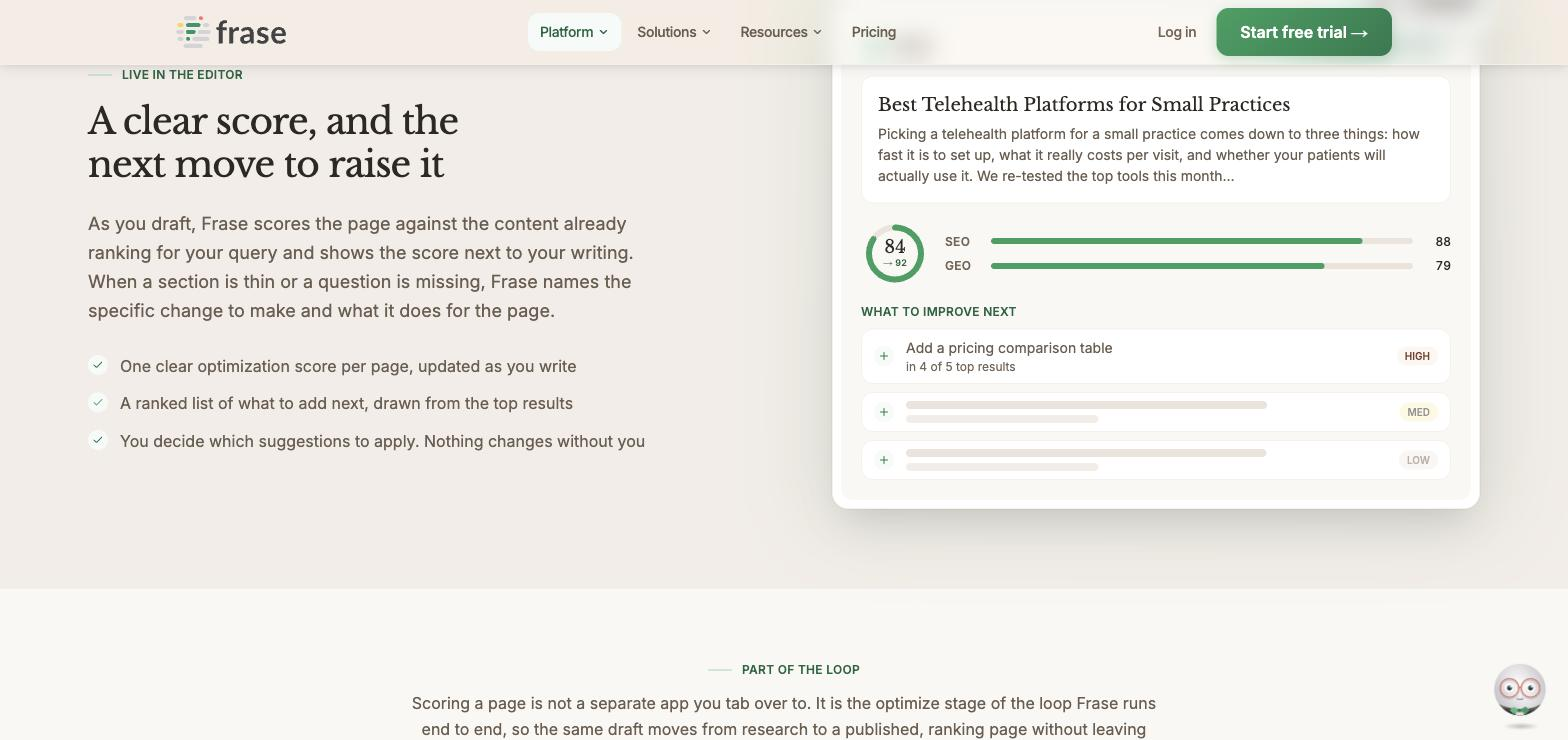
Scores a draft in real time against target topics, highlighting what is missing as the piece is written.
Generates first-draft sections from the brief, which a writer then edits — meant to speed the draft, not replace the writer.
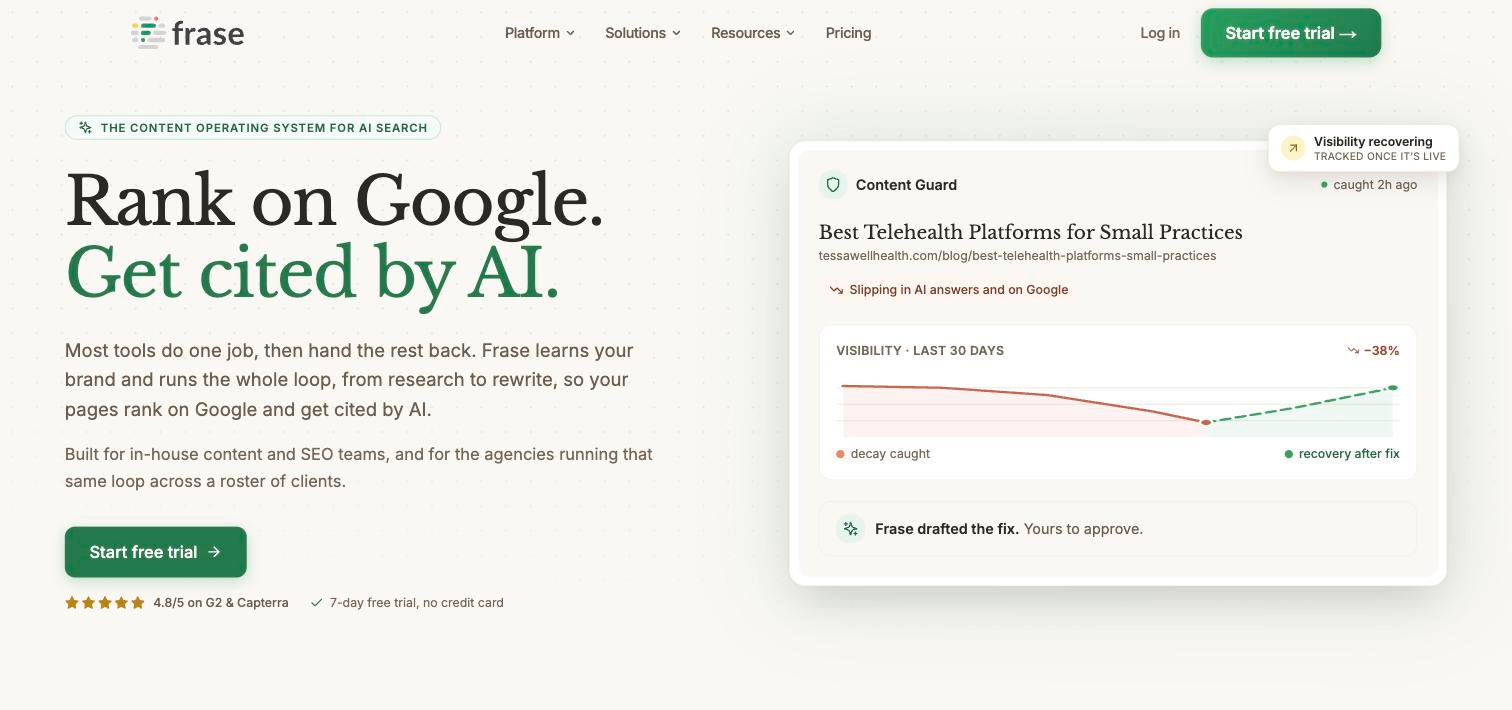
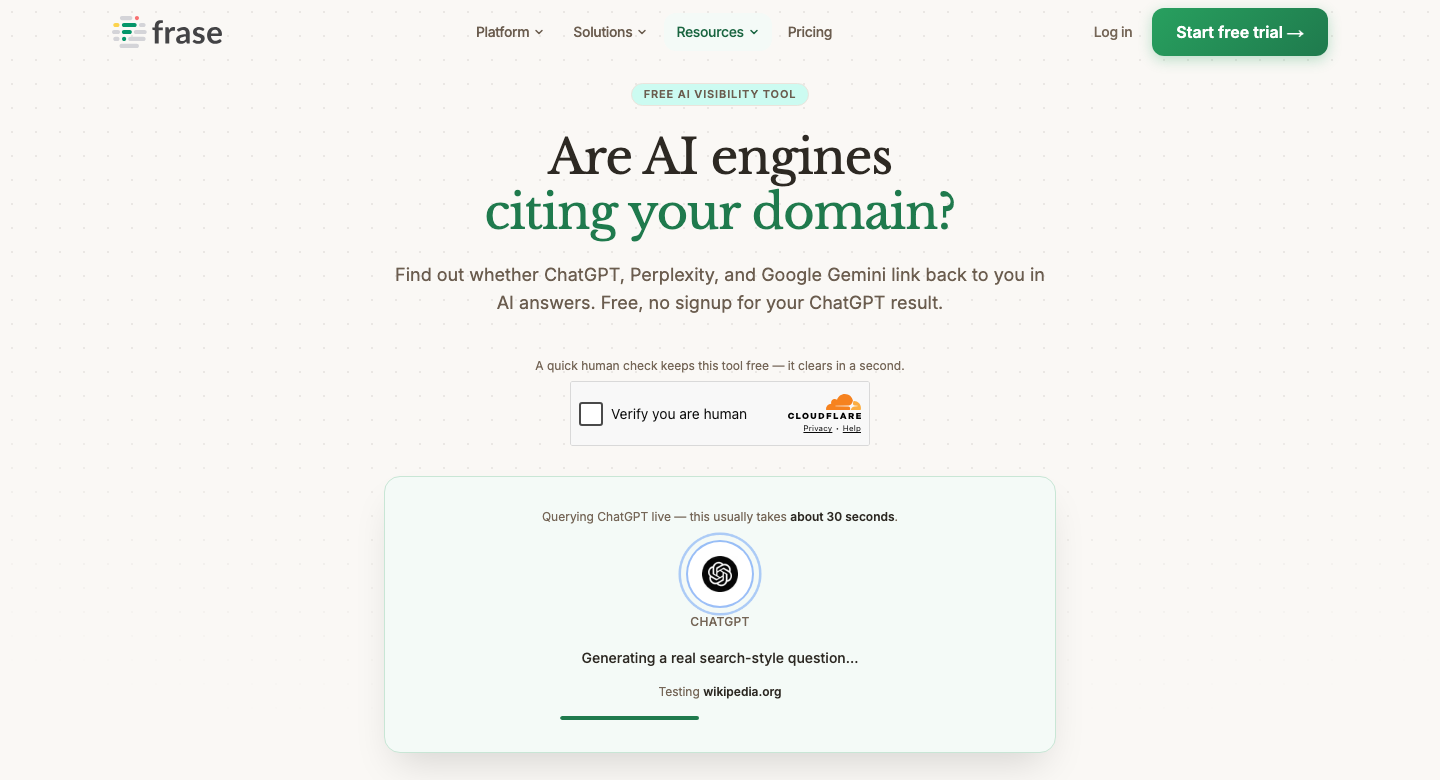
Tracks where your pages appear across search and AI answer engines, so you can see what's getting picked up.
Adds structure aimed at being cited by AI search engines, not just ranked links, as answer engines shape more discovery.
Pricing tiers and what's included in each.
7-day free trial. Paid plans start at $49 per month ($39/month billed annually).
A short path to first value.
a page to rank for, along with the audience you have in mind.
show the topics they cover and the gaps you could fill.
topic targets, so the writer starts with structure instead of a blank page.
the AI, while watching the live optimization score update as you add coverage.
suggested for AI search answers, so the page works for both.
to see how the page performs across search and AI answer engines over time.
Common questions about this tool, answered.
No. It can draft sections from the brief, but the output needs editing. Used as an autopilot it tends to produce competent but generic copy, so an editor still shapes the final piece.
It scores and structures content for AI answer engines as well as traditional search, and tracks where your pages appear in both, though approaches to AI visibility are still evolving.
It depends on SERP data, so established, searched topics give it the most to work from. Very new or low-volume topics leave it with little to brief against.
It offers a free trial and paid plans, but exact pricing needs verification before it is shown here. Check the official pricing page for current figures.
Context for choosing between this tool and alternatives.
Choose Frase when you want one tool spanning research, briefing, and optimization for search content, including AI-answer structure. If you mainly need on-page optimization scoring, NeuronWriter is a close comparison and often competes on price. For keyword research and topic discovery specifically, Keyword Insights and TopicRanker focus there and pair well with a separate writer. Rankscale.ai leans toward tracking visibility, including in AI search. The decision usually comes down to how much of the workflow you want consolidated versus assembling focused tools, so anyone prioritizing AI-search visibility should compare how each option scores and tracks for answer engines.