QR Code AI
Generates branded, trackable QR codes across many content types, with custom designs.
FreemiumFree planNo credit cardWeb
Last verified Jul 5, 2026
Generates branded, trackable QR codes across many content types, with custom designs.
Last verified Jul 5, 2026
Fast-read signals for fit, pricing, and trust.
QR Code AI is a QR-code generator that creates branded, customisable codes — logos, colours, shapes — across many content types, with scan analytics. It is aimed at marketers and businesses who want QR codes that look on-brand and can be tracked. Design plus tracking across dozens of QR types is its angle. Stylised codes can be harder to scan, so each should be tested.
You pick a content type — URL, WiFi, vCard, PDF, menu, social profile, and dozens more — and QR Code AI generates a code you can brand with logos, colours, and shapes across three creation modes, choose a static or a dynamic code whose destination you can edit after printing, then track scans through built-in analytics.
It suits marketers, small businesses, and event teams who want QR codes that match their brand and can be measured; it sits at the offline-to-online bridge, linking printed or on-screen placements to whatever you point them at, with exports (PNG, SVG, PDF, EPS) for print and screen. It is a single product covering QR generation, design, and tracking.
The honest limit: heavily stylised codes can be harder for some scanners to read, so test each design on a few devices before printing it at scale.
Quick fit check against how you actually work.
What you can actually do with this tool.
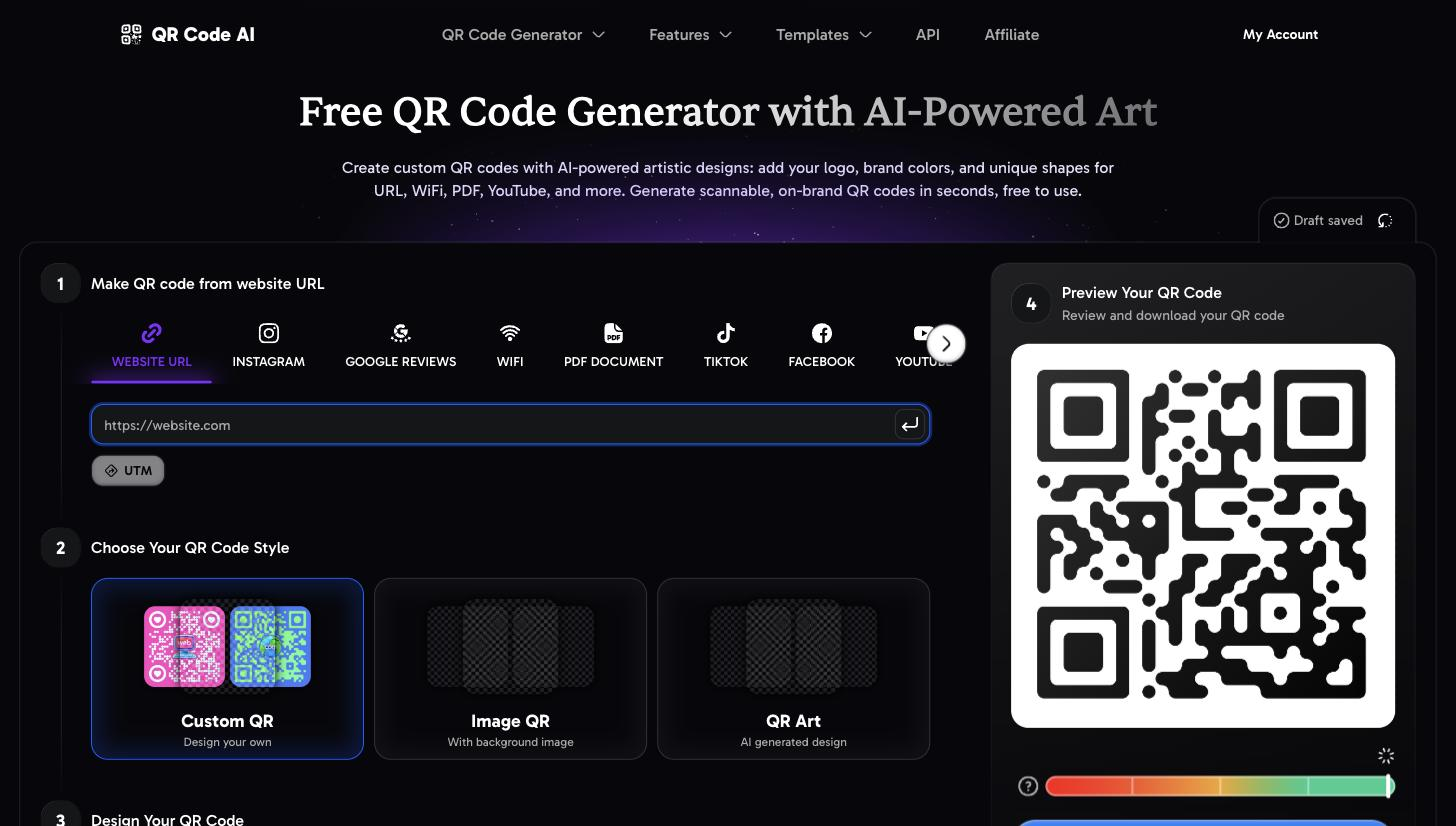
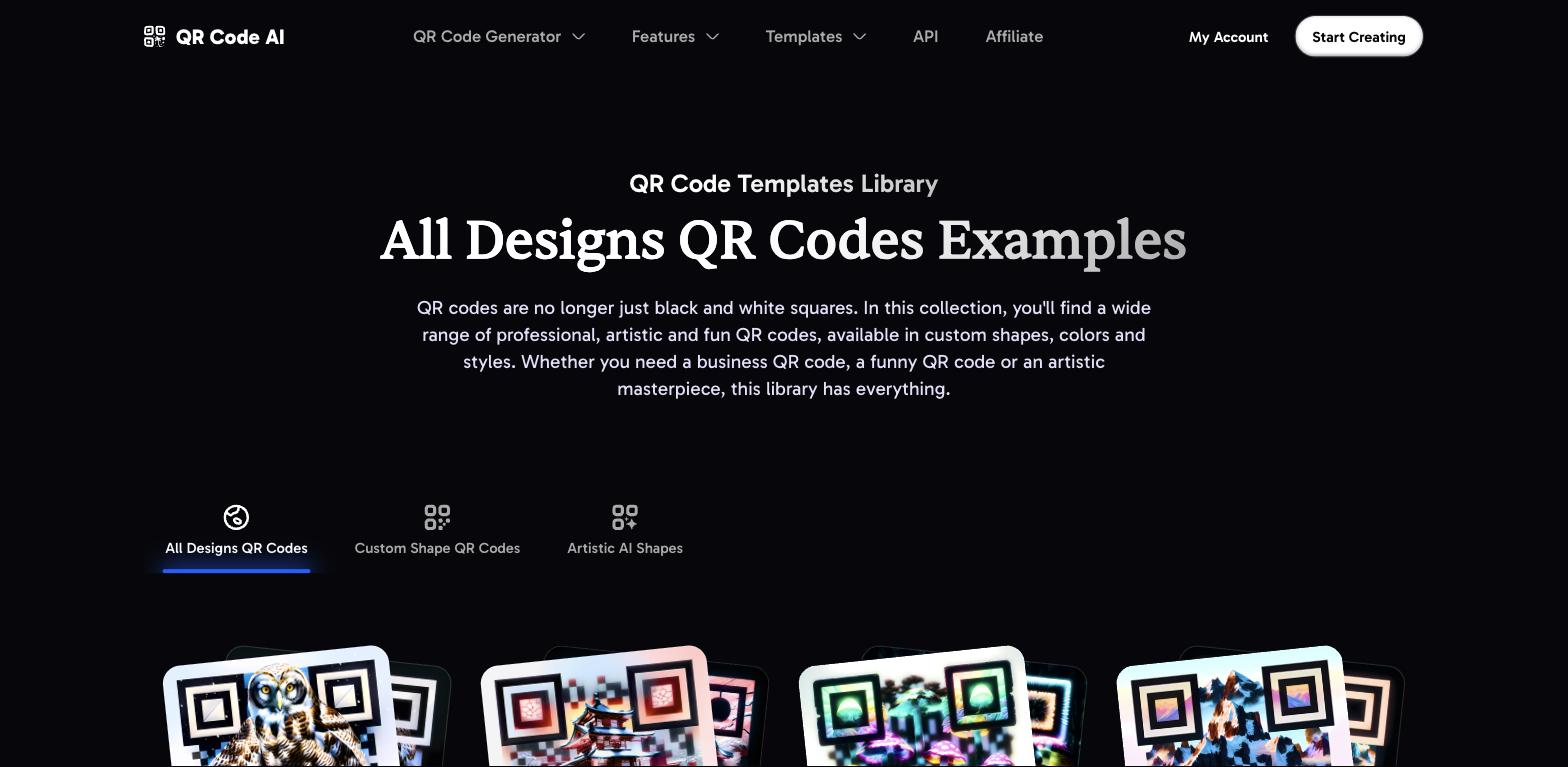
Creates branded codes across three modes — custom design with 50+ parameters, AI art from a text prompt, and image-overlay codes — so a code carries a logo, colours, and shapes rather than a plain square.
Generates codes for dozens of destinations — URL, WiFi, vCard, PDF, menu, social profiles, payment links, and more — from one tool.
Offers dynamic codes that store a short redirect, so the destination can be changed after a code is printed and scans are tracked, alongside static codes.
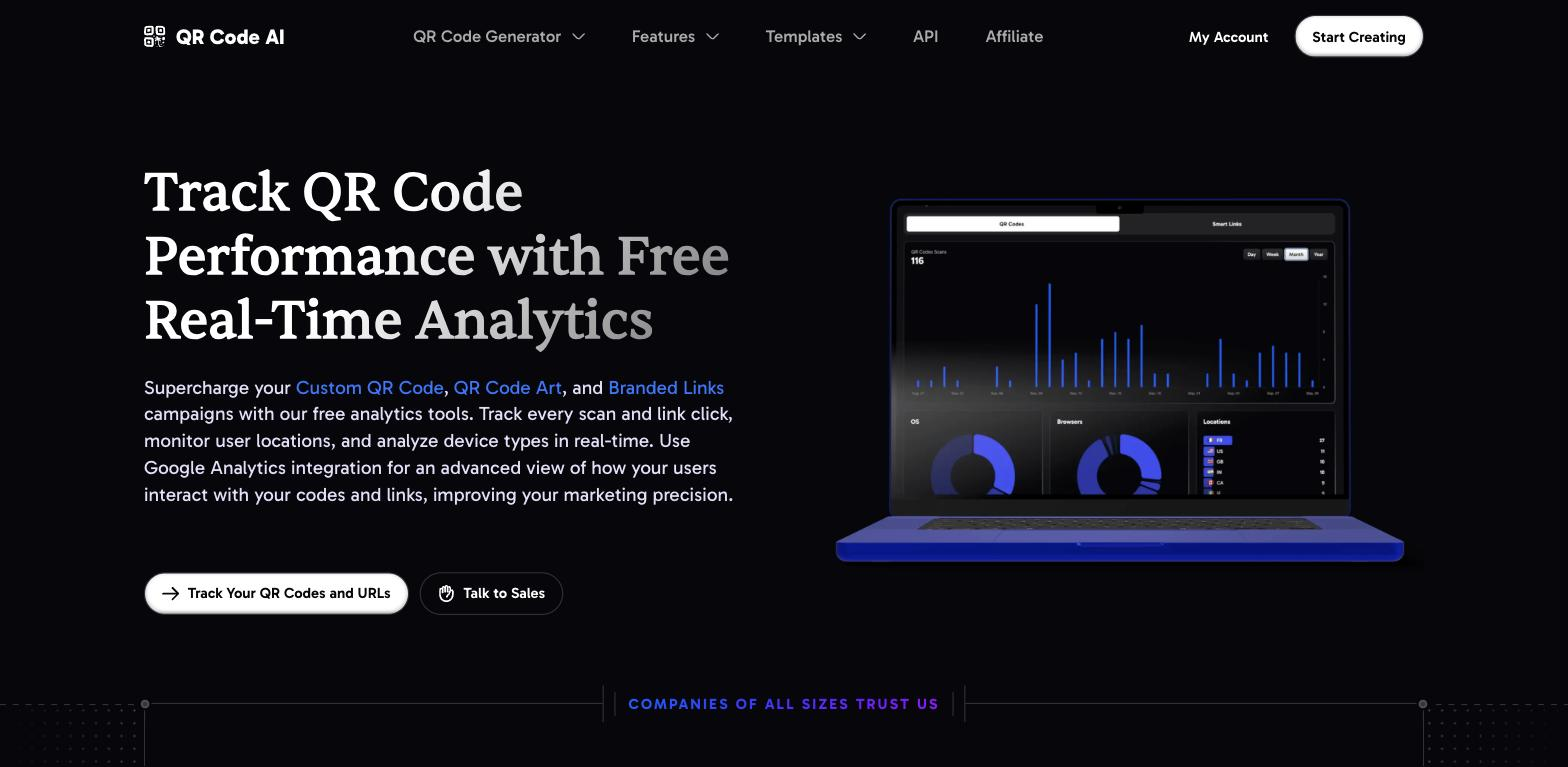
Tracks scan performance with geographic, device, and browser data plus UTM/Google Analytics support, so a placement or campaign can be measured.
Exports codes as PNG, SVG, PDF, and EPS to suit both print and screen use without a separate conversion step.
Provides an API to generate and manage branded codes in volume, so codes can be produced programmatically rather than one at a time.
Pricing tiers and what's included in each.
A limited free plan is available (no credit card) for core QR generation. A paid Premium plan unlocks advanced features (dynamic codes, analytics, custom domains, and more); the exact Premium price is not consistently shown on the official pricing page — check the official site.
A short path to first value.
Common questions about this tool, answered.
Usually, but heavy styling can trip some scanners, so test a design on a few devices before printing it at scale.
Plenty — from a web page or WiFi login to a contact card, a document, or a social profile, so most everyday needs are covered.
Yes — analytics show scan performance, which helps measure a campaign or placement.
For anything sensitive, confirm the current security and compliance terms before relying on it; treat scanability and data handling as things to verify for your specific case.
Context for choosing between this tool and alternatives.
QR generators differ on design versus reliability and reach. QR Code AI leans to branded, dynamic, trackable codes across many content types; QRBTF and Quick QR Art, the closest alternatives here, focus on artistic QR styling. Compare on whether tracking, dynamic (editable) destinations, and content-type breadth or pure visual style matters more for how you use codes.